

This book addresses the gynecologic health disparities for Black women
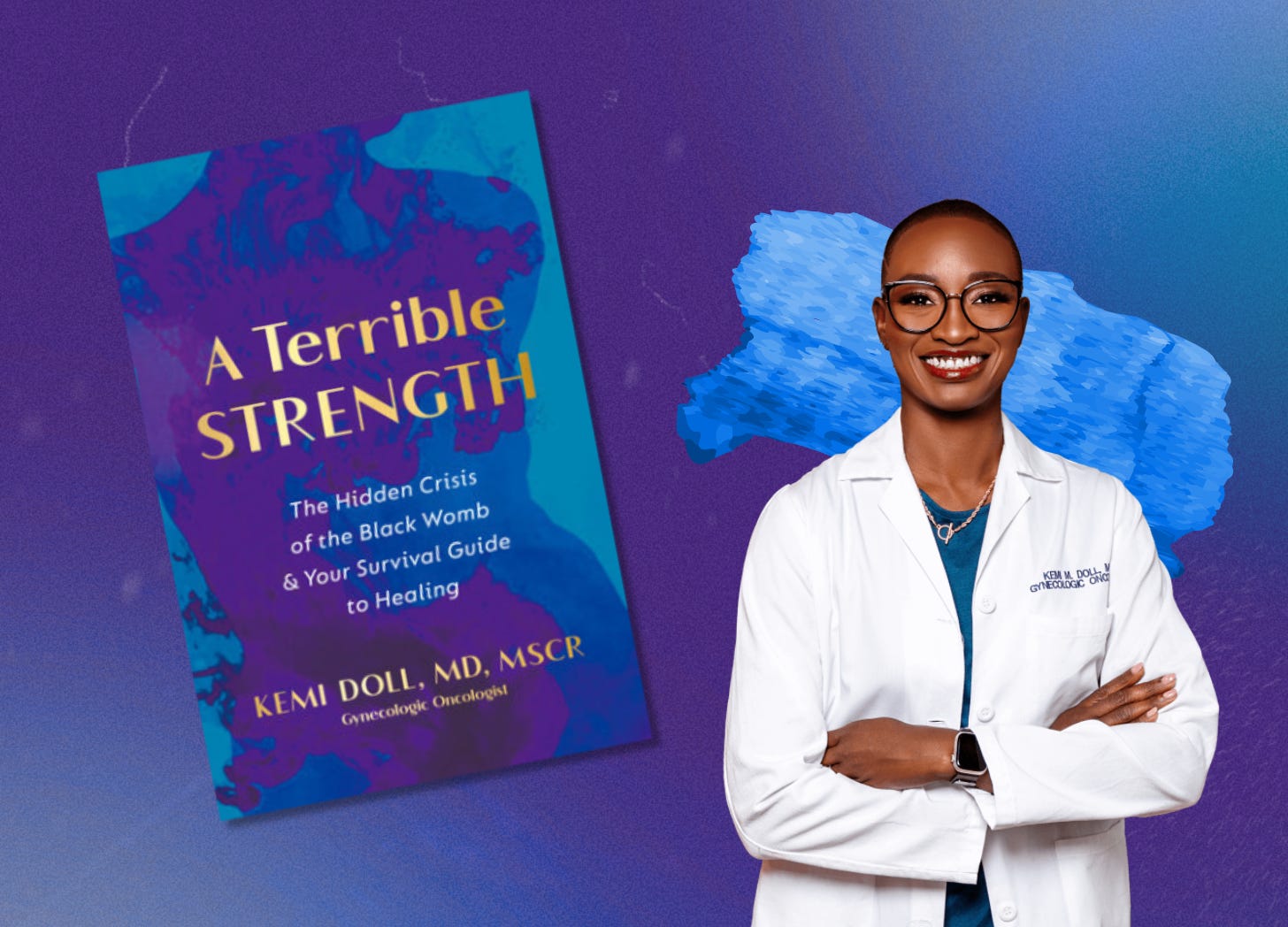
An exclusive interview with gynecologic oncologist Dr. Kemi Doll on her new book, A Terrible Strength: The Hidden Crisis of the Black Womb & Your Survival Guide to Healing

Good morning readers! On this lovely final day of July, I’m using proper capitalization rules for this newsletter. Don’t worry—I’m still a lowercase gyal, but I owe it to my sources to use all of the grammar and spelling knowledge I learned in school for exclusive interviews. Most of screaming into the void will still be conversational, lowercase blog-style writing, but I always hoped to include interviews on this newsletter. The state of the media industry and freelance journalism leaves it damn near impossible to find a home for several stories, so it would mean the world to me if you read this work. This newsletter is free, so I’m always grateful for support from paid subscribers or even a hello to hear that someone is reading. :)
For my first interview on screaming into the void, let me introduce you to the incredible Dr. Kemi Doll!
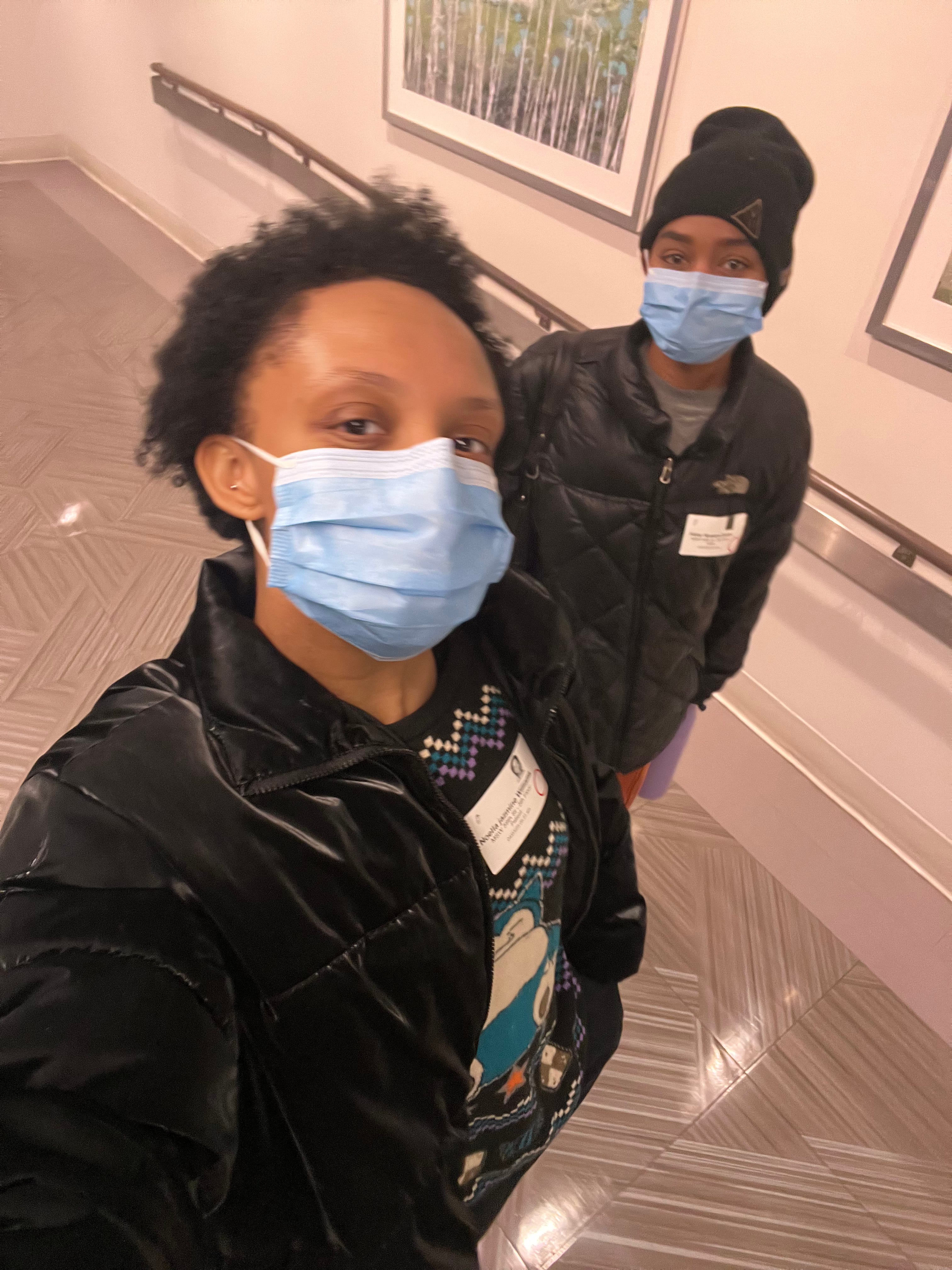
Last spring, my best friend Haley and I took an Uber at 4:30 a.m. from Bed-Stuy to reach Mt. Sinai West. It was the morning of my myomectomy, but I was referring to it as my fibroid eviction day. The 20 cm benign mass (originally 13 cm upon diagnosis in March 2024) that caused over a year’s worth of incessant pelvic pain, uncomfortable bowel movements, and excruciating period pain was finally about to vanish, but I had no idea what was waiting for me on the other side of the operating table.
The morning prep included a rundown of my surgery plan, greeting about seven doctors, and a lengthy needle that disappeared into my right arm. I left Haley’s side as I was wheeled into the operating room and started crying when the bright lights turned this far away fantasy into a frightening reality.
The original four-hour plan for my surgery turned into seven hours. Haley grew an anxious feeling when four hours passed, and she called my sister (a nurse with an action plan) to get ahold of the hospital to learn about this extension. When I regained consciousness in a hospital room, I was shocked to learn that it was the middle of the day. The distress deepened as my surgeon revealed that the uterine fibroid was an ovarian cyst in disguise, and a cruel case of endometriosis severely scarred my appendix and a fallopian tube. In hours, my laparoscopic myomectomy became an ovarian cystectomy with an opportunistic unilateral salpingectomy and incidental appendectomy. And the confirmation of endometriosis was the cherry on top.
Although my surgeon and I discussed the possibility of a faux fibroid, I spent that night in the hospital tossing and turning about my new reality with endometriosis, a chronic illness and dynamic disability. During time that should’ve been for resting or responding to my loved ones’ well wishes turned into an obsessive witch hunt for any comforting information about endometriosis. Suffering in silence was no longer an option, but my unexpected endurance with two less organs was difficult to process. Fortunately, recovery was a separate battle, so I disengaged with my new diagnosis so I could focus on healing. Two weeks later, I rewarded myself with a very cautious solo commute to see Sinners in IMAX on its opening night.
Experiencing sorrow and anxiety following the passing of my father in March reminded me of the importance of checking in with my body. When it’s impossible to eat, sleep, or find ambition, I recall how distraught I felt last year. Journaling about my symptoms and feelings, allowing myself to cry instead of suppressing stress, and casually talking about the haunting procedure are a starting point to work through through parental grief, in addition to unexpected job loss and recovery.
In my conversation with Dr. Kemi Doll, she shared her passion for owning a medical journal since “it’s an intervention against this disassociation that [Black women] were taught” in regard to our pain. “This is the first tangible, very powerful way you can start to reclaim agency,” she says.
Before my first visit to a primary care physician in February 2024, I wrote down my symptoms in a Notes tab on my phone for appointments and spent hours on r/fibroids in a way that didn’t rot my brain in a conspiracist way. I mean it when I say that—I was literally told to boil onions and drink the water to decrease the fibroids! Doll and I didn’t get into conspiracists too much, but this book is written for them, too.
Dr. Kemi Doll’s A Terrible Strength: The Hidden Crisis of the Black Womb & Your Survival Guide to Healing is for readers with a curiosity to interrogate our society that normalizes Black women’s pain as a rite of passage. Doll—a physician, surgeon, advocate, educator, career coach, and a double-board certified gynecologic oncologist and uterine cancer scientist—is more than equipped to comfort you through each stage of caring for your womb health.
Our conversation has been on my mind since I spoke to her in early July, and I can say the exact same about each chapter of her book. Let’s get into our chat about the Superwoman schema, the book writing process, womb suffering, and advocating for yourself in gynecologic care!
This interview has been edited for length and clarity.
Noella Williams: Why was it necessary to walk readers through the history of enslaved Black women, your familial background, and racial biases in regard to their reproductive health?
Kemi Doll: When I was in medical school, one of the things I got used to—and I think any Black medical student does—is that you learn how the body works, and then you learn how it goes wrong, and then you learn how that is worse for Black people.
And I wanted to give [my family history] to the readers, because now I’m about to take you on this whole journey of some harrowing stories walking through people’s pain, suffering, and frustration at their doctors. If you have that understanding at the baseline of where [the healthcare industry] started, the neglect of the Black woman’s body, and how it was literally perceived as this different thing than everybody else, you better understand the soil that all of this has grown in.
NW: What would you say to someone who might divulge some of the things like I'm telling you—we briefly spoke about the symptoms for my cycle and ovarian cyst—what would you say when they're like, “I'm finally going to the doctor?”
KD: From the second you decide you’re going to the doctor, you’ve got to start tracking your symptoms. I try to explain to people is that we live in a society that says, “Keep your periods a secret, this is nobody’s business.” It’s given that you likely never learned what normal was, nobody told you to think about an abnormal amount of bleeding or enduring too much pain, and you’re taught to just move through the world like nothing’s happening. That has consequences.
I have empathy for coming to the doctor and being like, “I don’t know, I feel like my bleeding is a lot and I’m bothered.” And then we start asking questions like, “How many days did you bleed? What were the size of the clots? When did it start? What made it worse? What made it better?” And you’re like, “I don’t know.”
And that is a frustrating experience on both sides because I need the answers to those questions for me to understand the best next steps for you. But you don’t have the answer to the question because you’ve been doing what you were taught to do, which is just disassociate and pretend nothing’s going on and handle it.
NW: You repeatedly talk about “suffering in silence,” and I was called out by a paragraph about the Superwoman Schema. I really like the way you emphasize that we can’t normalize our pain and “keep going.” Why is this something that requires constant reminders?
KD: There has to be ways to constantly reaffirm and remind ourselves to push back against narratives that are not helpful for us, such as Black Girl Magic and Black is Beautiful. We have to keep reminding ourselves that this comes from the fact that Black women are taught to take care of everybody, to manage everything, to put everybody else first, to fight for everybody else, to be everybody else’s advocate, and to not show vulnerability because you are also everybody else’s target because of the intersection of racism and sexism.
That’s really emphasized and clarified by the Superwoman schema. I was called out too, girl, when it was like, “don’t show emotional vulnerability or portray strength,” like stop talking about me. I mean, the book is called A Terrible Strength, and the strength part is there because I want to honor that this is a strength to be able to move through this society. And yet, we have to continually remind ourselves that this is not a strength we should be using to endure these wound symptoms or manage severe gynecologic disease.
This Superwoman schema didn’t come out of the blue. It’s functional to be able to do the things we need to do in everyday life in this society.
NW: I was reading Rose’s section in the fibroids chapter and appreciate how you shared others’ experiences in a way where you were like, “they’re dressed in this beautiful gown that makes them feel comfortable” or “they have a beautiful life, and they’re full people.”
KD: I think about that all the time. Y'all think Black women are amazing already, yet 30% of us are anemic. Like, can you imagine?
NW: I'm imagining if I had all the blood I needed in my body.
KD: Think about the potential that we have and what we have been able to do, which is a tenth of what we are actually capable of when we’re well. Oftentimes, in medical books, they tend to do snapshot vignettes [that] reduce the person down to just the condition that they’re coming in with. The way to show [this hidden crisis] is to really go deep in these women’s lives to tell you all about them—not just that they are this condition—but you see how they’re all these things at once and yet.
NW: I’ve noticed a lot of notable Black women like Lupita Nyong’o, Monaleo, Taylour Paige, Toni Braxton, FKA Twigs, Eve, Venus Williams, and so many more are shining a light on their womb health. Do you think this encourages their fans to have a “they’re just like me” moment and recognize they may be suffering too?
KD: I think it’s really helpful [to see notable people coexist with these conditions] because it also helps take away that stigma of thinking, “this is something I did to myself,” or “this is just a problem of the downtrodden.”
Lupita Nyong’o is objectively one of the most beautiful people on the planet, and she is lauded for that reason and she is telling you that she has suffered so greatly from this womb condition. Juxtaposing that is important for people to start to realize that you really can be suffering while it looks like everything is fine.
NW: Could you tell me more about the process of writing this book? Mentally, it’s been a lot to consume. I found myself crying at pages with similar stories to my diagnosis and feeling validated when you write that it’s a bad excuse to not know enough about fibroids. How was it to recall these very vulnerable moments?
KD: It was very activating and energizing because it really felt like I just knew this was the next step for me that needed to happen. I have all this information, experiences, and research, but nobody knows about it. It’s all behind ivory towers and in research conferences. There was [about 75%] of me that felt really good, and then [25% of the time] I was writing a section and then sitting back and crying.
There were times where I had to take a break and metabolize the interview process, including how I prepared myself and conducted the actual interviews. The hardest parts were writing the memoir parts, because there’s a lot of power in figuring out what the story is of your own experiences. Writing my first gynecology experience was the first time I wrote it down. It’s alive every time I go to the gynecologist, but I had never actually sat and wrote it down.
Realizing the depth of violation that had happened to me was probably my most emotional moment, but [simultaneously] motivating because I’m interviewing [Whitney] and she’s telling me the same thing about her first gynecologic visit. That’s why [the difficult moments] have to be in the book, because I know other people will read it and think that sounds familiar.
NW: How was Essence Fest and any other experiences to talk about the book IRL?
KD: Things are going great post-book release. It has been so important to go on the book tour. It was a lot of work to figure out the funding, support, and sponsorship, but it’s truly the most gratifying moment to actually speak with people who’ve read the book or who are interested in reading the book. I would be on stage talking, and then in the signing line, [the audience] is like, “You’re telling my story up there.”
I’m so grateful that the book is doing what I hoped it would, which is humanizing and empowering us without flinching from the reality of what people really are going through. Essence was a cherry on top because [I got the invite] during the tour, so it was a beautiful surprise to be in a sea of Black women. If I am talking to Black women and Black people with a uterus about this, it’s an engaged conversation, and that’s just priceless.
Purchase a copy of A Terrible Strength: The Hidden Crisis of the Black Womb & Your Survival Guide to Healing by Dr. Kemi Doll on Bookshop.
Wow, I feel like this was really important for me to read at this stage of my health journey. Thank you for writing this and I am excited to read the book as well!